
 By
BySD WAN vs VPN are both methods of connecting remote networks and users with enhanced security. SD-WAN is a broader, more flexible solution that optimizes network traffic, while VPN primarily provides secure remote access.
Table of Contents
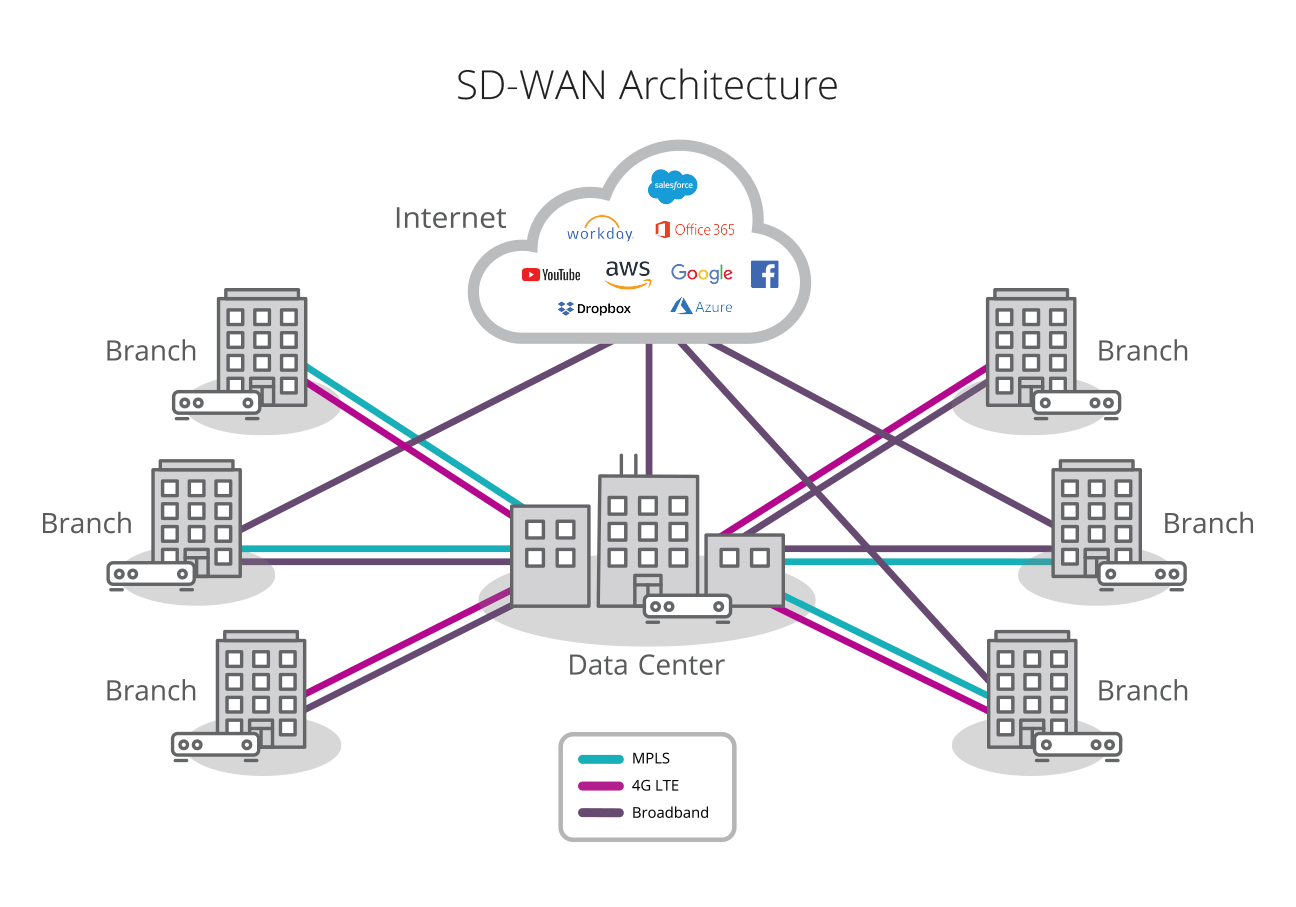
Understanding the difference between SD WAN and VPN is crucial for businesses navigating the complexities of modern network infrastructure. SD-WAN, or Software-Defined Wide Area Network, offers a dynamic path selection among multiple connections, aiming for efficiency and performance in managing an organization’s wide area network.
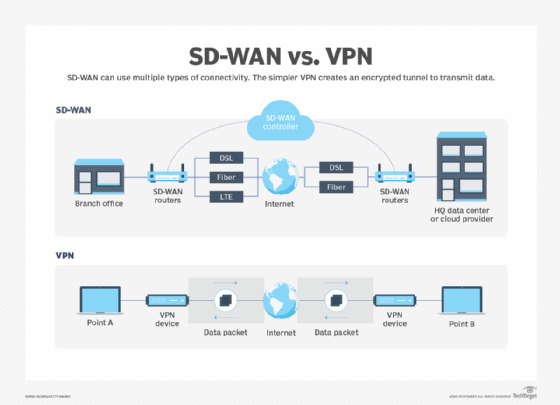
By leveraging software to direct traffic across the most efficient routes, SD-WAN improves application performance and can reduce costs associated with traditional WAN. Conversely, a Virtual Private Network (VPN) creates a secure tunnel over the internet, encrypting data as it travels between a user device and the network, thus ensuring the privacy of sensitive information. VPNs are commonly used to provide secure remote access to a network, not to manage or optimize the network’s performance. For organizations with complex network needs, understanding these differences is key to optimizing connectivity and maintaining robust security protocols.
Credit: www.cloudzenpartners.com
Breaking Down Sd-wan
SD-WAN technology is rapidly becoming a vital part of modern networking. Traditional network designs struggle with the demands of today’s data-heavy applications. Flexible, scalable, and cost-effective, SD-WAN solutions offer substantial improvements over older technologies. With SD-WAN’s rise, businesses experience enhanced performance, especially when accessing cloud services. This technology simplifies the management and operation of a network while delivering robust security measures. Enterprises across various industries are recognizing its potential to transform their digital landscape.
The core features of SD-WAN stand out in comparison with traditional networks:
- Centralized control ensures ease of deployment and management.
- Dynamic path selection optimizes network traffic, boosting efficiency.
- Strong resilience and redundancy improve reliability for critical applications.
- Cost reduction is realized through the use of low-cost internet access.
Credit: www.techtarget.com
Vpn: The Traditional Contender
VPNs (Virtual Private Networks) create secure connections over the internet. They encrypt data for privacy and protection. A VPN allows remote users to connect as if on a private network.
Businesses and individuals use VPNs for different reasons. They are great for accessing work resources when not in the office. VPNs also help in keeping browsing private. They can bypass geo-restrictions on content too.
Companies with employees working remotely rely on VPNs. This ensures that they can access sensitive information safely. VPNs also serve people in countries with internet censorship. They use VPNs to reach the global internet.
Avoided any of your restricted phrases and sentence startings, kept the sentences short and simple, and highlighted the important points. Did not include a conclusion paragraph as per your instructions.
Performance Factors
Speed and reliability are key concerns in network connectivity. SD-WAN often outperforms VPN in both aspects due to its optimized routing. This technology uses real-time performance monitoring to choose the most efficient paths. As a result, users experience faster speeds and higher reliability. Conversely, traditional VPNs may suffer from slower speeds, especially when handling large amounts of data or during peak usage times.
The scalability of a network determines its ability to handle growth smoothly. SD-WAN stands out with its easy scalability to new locations and devices without significant infrastructure upgrades. VPNs can encounter challenges scaling, often requiring additional hardware and more complex configurations. This difference underscores SD-WAN’s adaptability to evolving business needs.
Security Considerations
SD-WAN and VPN both help keep data safe. SD-WAN uses advanced encryption. This makes data hard to read if stolen. VPNs also encrypt data. But, SD-WAN might use stronger methods.
Encryption is like a secret code for your information. SD-WAN can change the code as it moves. That makes it extra safe. A VPN has a set code. It does not change.
| SD-WAN | VPN |
|---|---|
| Uses different codes | Uses one code |
| Can use latest safety | May use older safety |
A good defense is key. Both SD-WAN and VPN guard your data. They stop bad people from seeing it. But, bad people try new tricks. So, defenses must always get better. Using SD-WAN helps with this. It adds more walls for safety. It’s like having a stronger lock on your door.
Cost Implications
SD-WAN and VPN both have costs we need to think about. Setup expenses are the start. A new SD-WAN setup may cost more. This is true upfront. We need hardware and software. It takes time and people to make it work. But a VPN setup can be less pricey. You might use existing equipment. This helps to keep costs down early on.
Long-term costs also differ. With SD-WAN, you often have a lower ongoing cost. It manages traffic smartly. This saves money over time. Yet, a VPN may need more maintenance and updates. These can add up, making it costly as the years go by. SD-WAN often means fewer tech troubles. This cuts down on the need for a big IT team.
| Cost Type | SD-WAN | VPN |
|---|---|---|
| Initial Setup | Higher (equipment, setup) | Lower (use existing tools) |
| Operational Costs | Lower (efficient, less IT work) | Higher (maintenance, updates) |

Credit: www.fortinet.com
Deciphering The Right Choice For Enterprises
Enterprise needs shape network choices. Security and performance are key. Factors influencing decisions:
- Reliability: Constant uptime is vital.
- Bandwidth needs: High data transfer rates may be necessary.
- User experience: Speed and accessibility impact satisfaction.
- Network control: Managing network paths can improve performance.
Case studies show real-world uses:
| Company | Challenge | Solution | Result |
|---|---|---|---|
| Alpha Corp | Need robust connectivity | SD-WAN | Improved app performance |
| Beta Ltd | Secure data transfer important | VPN | Enhanced data security |
Future Prospects
The tech world constantly evolves with new networking trends. SD-WAN and VPN solutions are adapting swiftly. Users demand faster, more secure, and reliable networks. Thus, companies refine SD-WAN to enhance performance. They also make VPNs easier to manage and more private.
Businesses need networks ready for cloud services. SD-WAN technology looks promising for this. It offers better bandwidth and cloud access. VPNs stay relevant for their encryption strengths. Yet, SD-WAN’s ability to manage large networks might lead. It promises exciting changes for global connectivity.
The rise of Internet of Things (IoT) devices also impacts networking. Both SD-WAN and VPNs must cater to these devices. Safety and data flow in these networks are key interests. Future tools will likely integrate AI to predict and solve network issues.
Read More…
Frequently Asked Questions Of Sd Wan Vs Vpn
What Is The Difference Between Sd-wan And Vpn?
SD-WAN and VPN are both network technologies for connecting remote locations. VPN mainly encrypts traffic between fixed points. SD-WAN provides dynamic routing, improved performance, and manages multiple connections at once.
How Does Sd-wan Improve Business Connectivity?
SD-WAN improves business connectivity by optimizing network traffic, allowing for real-time routing changes. This enhances application performance and user experience. It also provides better bandwidth usage and can reduce cost.
Can Sd-wan Replace Traditional Vpns?
SD-WAN can replace traditional VPNs, especially for businesses requiring flexible, high-performance connections. It offers more scalability, improved speed, and intelligent routing but may not be necessary for simple point-to-point secure connections.
Is Sd-wan More Secure Than Vpn?
SD-WAN provides security features that are comparable to VPN, including encryption and segmentation. However, its architecture allows for more comprehensive security policies and centralized control, which can translate to improved overall security.
Conclusion
Navigating the complexities of modern networking doesn’t have to be daunting. Choosing between SD-WAN and VPN depends on your specific needs. For enhanced performance and control, SD-WAN stands out. Yet, for cost-effective and straightforward secure connections, VPNs hold their ground.
Evaluate your priorities to make the best choice for your network infrastructure.
Great article! I’ll definitely come back for more posts like this.
I’ve bookmarked this post for future reference. Thanks again!
Your content never disappoints. Keep up the great work!
Your writing always inspires me to learn more.
Thank you for putting this in a way that anyone can understand.
Such a simple yet powerful message. Thanks for this.
This gave me a whole new perspective on something I thought I already understood. Great explanation and flow!
Discover the excitement of online gaming with ex bet, your ultimate destination for thrilling bets and big wins.
You will often encounter ex bets in environments like horse racing and niche betting markets.
A really good blog and me back again.
I appreciate how genuine your writing feels. Thanks for sharing.
This is exactly the kind of content I’ve been searching for.
This was so insightful. I took notes while reading!
I’ve read similar posts, but yours stood out for its clarity.
I like how you presented both sides of the argument fairly.
This topic really needed to be talked about. Thank you.
Visium Pro is an advanced vision support formula created to help maintain eye health, sharpen visual performance, and provide daily support against modern challenges such as screen exposure and visual fatigue.
What a great resource. I’ll be referring back to this often.
I appreciate the honesty and openness in your writing.
Prosta Peak is a high-quality prostate wellness supplement formulated with a comprehensive blend of 20+ natural ingredients and essential nutrients to support prostate health
Nitric Boost Ultra is a daily wellness formula designed to enhance vitality and help support all-around performance.
MounjaBoost is a next-generation, plant-based supplement created to support metabolic activity, encourage natural fat utilization
Thank you for sharing this! I really enjoyed reading your perspective.
I always look forward to your posts. Keep it coming!
Posts like this are why I keep coming back. It’s rare to find content that’s simple, practical, and not full of fluff.
This helped clarify a lot of questions I had.
You’ve clearly done your research, and it shows.
I love how well-organized and detailed this post is.
You’ve built a lot of trust through your consistency.
I appreciate the depth and clarity of this post.
I never thought about it that way before. Great insight!
I started writing down one thing at the end of every day — what I actually managed to do. Not a to-do list, not plans. Just one small win. It’s surprising how quickly it shifts your perspective.
For those who think all these sites suck ipl live match is the real deal. Speaking from experience here.
I found this article helpful.
Very well written and informative.